
Did Goats Really Discover Coffee? Exploring Ethiopia’s Legendary Coffee Origins
Did you know that in Ethiopia, it’s not just common to add salt, milk, and even butter to coffee, but it’s also considered rude to refuse a cup? Such a captivating aspect of Ethiopian coffee culture that illustrates the importance of coffee in their society. If you’re traveling in Ethiopia and are invited for coffee, take it as a sign of appreciation, because it’s a symbol of friendship, respect and great hospitality.
The Origin of Coffee
This strong cultural attachment to coffee is not surprising, considering Ethiopia’s status as the birthplace of both the coffee plant and coffee culture itself. No one knows exactly how or when coffee was discovered, although there are many legends about its origins. One popular tale suggests that coffee was discovered in Ethiopia in the 9th century by a goat herder named Kaldi.
The Legend of Kaldi and the Dancing Goats: Where It All Began
The story goes like this: Kaldi was a young goatherd living in the Ethiopian mountains. One day he noticed that his goats were romping energetically after eating red berries from an unknown tree. They had so much energy that they didn’t sleep at all that night! At first, Kaldi thought they were possessed. Curiosity got the best of him, and after eating some of the mysterious red berries, he was as energetic as his goats. He became the happiest goat herder around! This discovery caught the attention of a passing monk who observed Kaldi and the dancing goats. Intrigued, he stopped for a moment and went to see Kaldi. When the goat herder told him about the red berries he’d found, the monk felt that his prayers were answered. He explained that he used to fall asleep in the middle of his prayers. After eating the mysterious red berries, the monk was finally able to stay awake for hours on end, praying in a state of divine ecstasy. And so, the earliest form of coffee was born!
Fast forward to today, and coffee has become a beloved beverage worldwide. In Ethiopia alone, over 12 million people are involved in growing and harvesting coffee, making it a cornerstone of national culture.
Ethiopian Coffee Expressions
Perhaps one of the clearest reflections of coffee’s role in Ethiopian culture is in its language. Coffee plays such a heavily ingrained role that is deeply embedded in the language and expressions of the people.
One common Ethiopian coffee saying is “Buna dabo naw,” which literally translates to “Coffee is our bread.” Pretty much sums up the importance of coffee there, doesn’t it?
Ethiopian Coffee Today
Ethiopia now cultivates more than a thousand varieties of coffee beans, with the indigenous arabica coffee variety being particularly prized. These beans are grown in the shade and without the use of chemicals, resulting in a rich, intense flavor that is celebrated worldwide.
Ethiopian Coffee Growing Regions
The diversity of Ethiopian coffee is reflected in its regions, each known for their own distinct flavor profile: Sidamo, Yirgacheffe, Harrar, and Limu. Each region produces coffee with unique characteristics.
- Yirgacheffe Region: Coffee beans from this region are considered to be among the highest quality Arabica beans in the world. Ethiopian Yirgacheffe coffee is renowned for its full-bodied richness, complemented by distinct tones of acidity, creating a uniquely intense coffee experience. It is characterized by a dry, winey aftertaste that places it in the category of intense coffees. A light roast is used to preserve the coffee’s intrinsic flavor nuances, making it a perfect choice for those seeking a deep, memorable coffee experience. Don’t miss the exceptional taste of Yirgacheffe coffee from Ethiopia. Buy it online here.
- Limu Region: A harmonious choice for coffee lovers, Ethiopia Limu coffee has a good level of acidity and a well-balanced body. It’s a mild coffee with a taste marked by a sweet, chocolaty aroma that ends with a subtle finish reminiscent of blueberries. A medium roast enhances these characteristics and guarantees a rich, satisfying cup every time. Into trying new coffee? Bring the authentic taste of Limu into your home. Shop now.
- Sidamo Region: Ethiopia Sidamo coffee offers a pleasantly sweet taste with balanced acidity and a well-rounded flavor profile. Characterized by flowery notes and a satin finish of wild berries, it falls into the Fruity & Floral flavor category. Medium roasting brings out its unique characteristics, making it a delightful choice for coffee enthusiasts. Experience the unique flavors of Ethiopia Sidamo coffee. Order yours online today!
- Harrar Region: Coffee from the Harrar region is winey with a fruity essence and has a flavor profile that combines a pronounced blueberry aroma with a lingering chocolate aftertaste. This clearly places it in the fruity-sweet category and appeals to those who appreciate a complex coffee experience. The beans are medium roasted to perfectly balance the bold fruitiness with deep, sweet nuances, creating a cup that is as memorable as it is delicious. Craving something special? Ethiopia Harrar coffee is just a click away. Order now and taste the difference!
How It’s Served
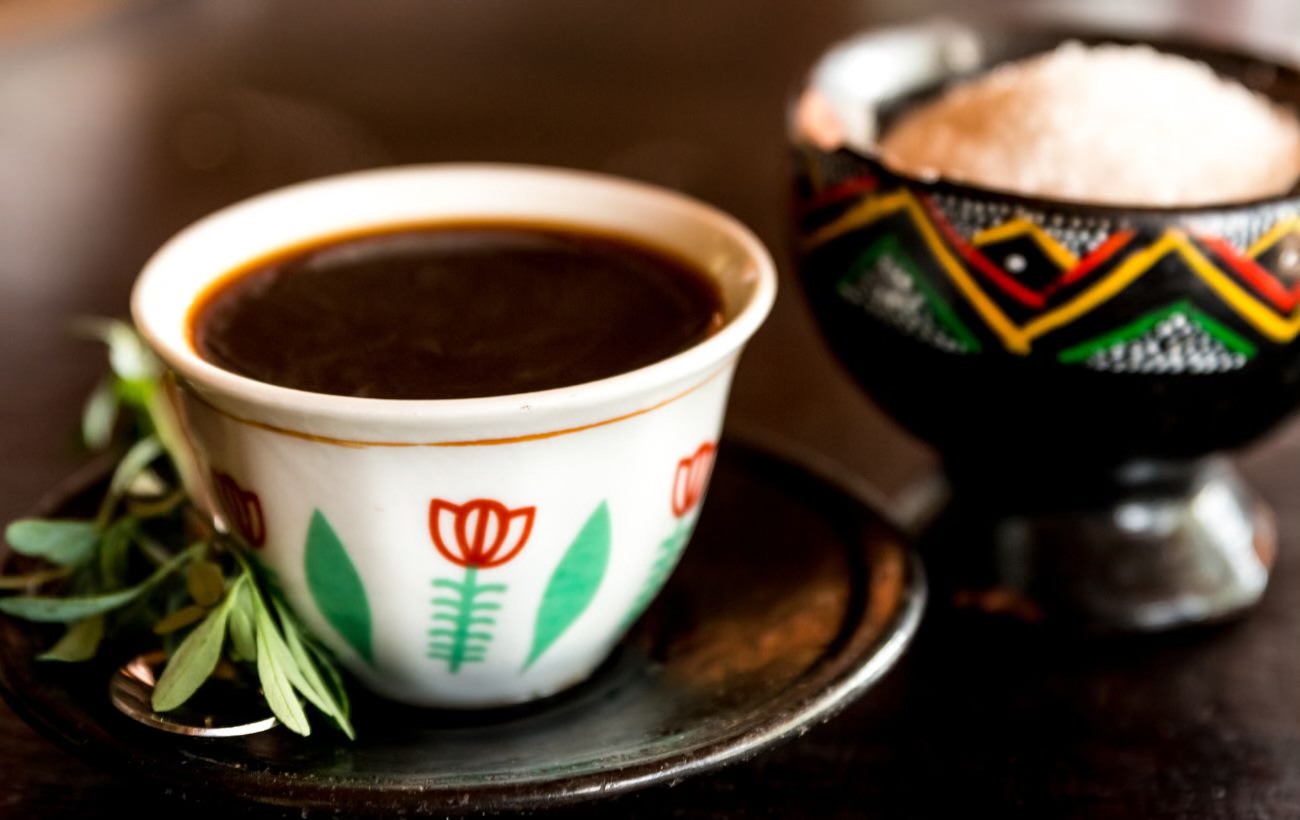
In Ethiopia, coffee is more than just a drink—it’s a ceremonial ritual. The tradition involves brewing and serving coffee in three rounds: Abol, Tona, and Bereka. Each round has its own significance, deepening the communal experience. The coffee is served in small cups called “Cini” (pronounced as sini) and enjoyed with nuts, popcorn, roasted barley, or other small snacks.
Final Thoughts
The enduring legacy of Ethiopian coffee, with its centuries-old history, reflects its timeless appeal and significance in culture. Beyond its unique taste profiles, coffee represents a way of life, a heritage that continues to shape Ethiopian society.
While you may not be able to visit Ethiopia immediately, you can still experience the rich flavors of Ethiopian coffee. Our online store offers selections like Ethiopia Yirgacheffe, Sidamo, Limu, or Harrar, sourced from sustainable farms to ensure maximum quality and flavor. With Mystique Coffee, discover the essence of Ethiopian culture with every cup, and let the authentic taste of its coffee transport you to the heart of its traditions, no matter where you are in the world.